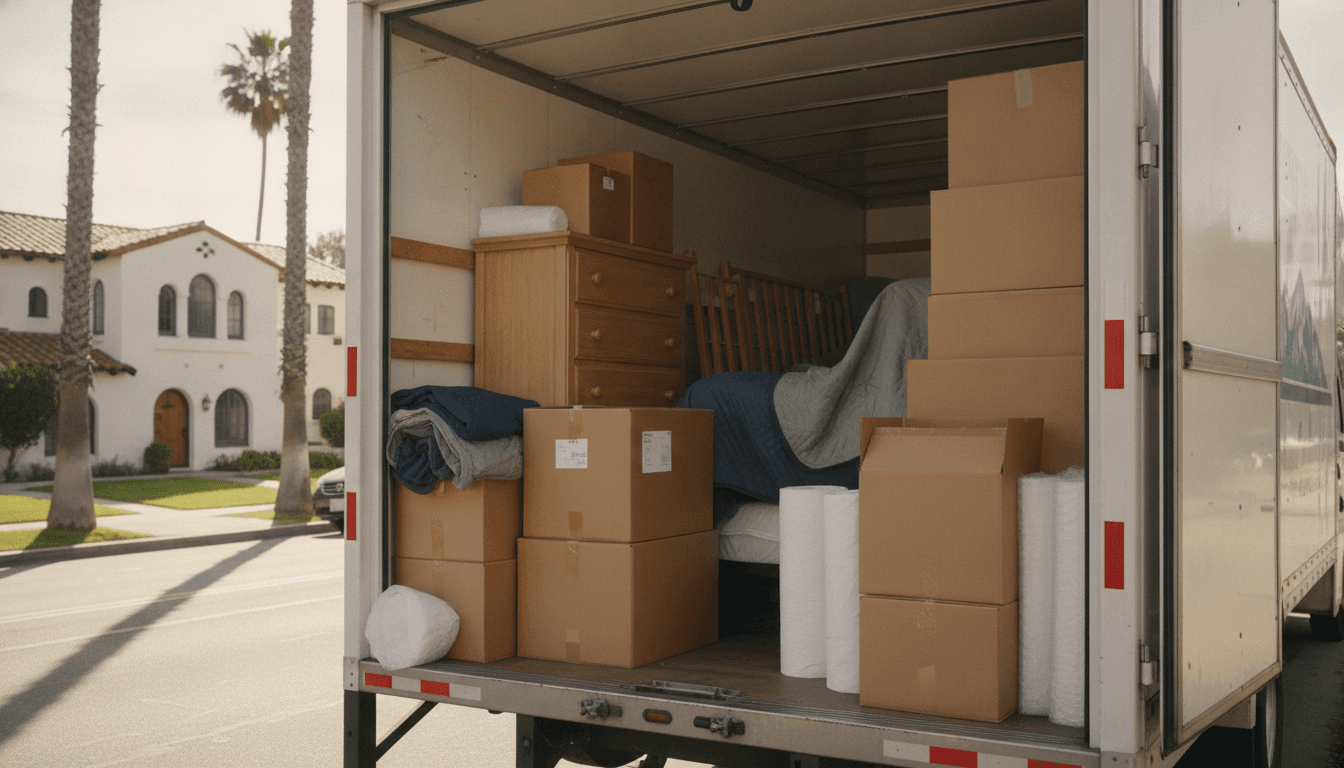
movers
How Much Does a Local Move Cost in Los Angeles, CA? (2026)
A local move in Los Angeles costs $600 to $1,400 for a one-bedroom and $1,800 to $4,500 for a three-bedroom. Hourly rates, LA-specific fees, and California rules.
In This Article
How Much Does a Local Move Cost in Los Angeles, CA? (2026)
A local move in Los Angeles costs $600 to $1,400 for a one-bedroom apartment and $1,800 to $4,500 for a three-bedroom house, based on the hourly rates licensed movers are charging across the county right now. Two movers and a truck run $150 to $220 an hour, and three movers run $200 to $290. Add a travel fee, a few flights of stairs in a Koreatown walk-up, or a long carry from a Santa Monica street with no parking, and the bill climbs from there.
Los Angeles is the most expensive local moving market in California outside the Bay Area, and the reasons are mostly about time. Traffic turns a 12-mile move from Silver Lake to Culver City into a 90-minute drive on a Friday afternoon, and buildings have elevator reservations, loading dock windows, and certificate of insurance requirements. This guide breaks down the hourly rates, what each size of home typically costs, the fees specific to LA, and what the state requires from every mover you hire.
Hourly Rates for Local Movers in LA
Local moves in California are regulated by the Bureau of Household Goods and Services, and moves under 100 miles are billed hourly by law. The rate covers the crew, the truck, fuel, moving pads, and basic tools. Two movers and a 26-foot truck run $150 to $220 an hour across Los Angeles County, three movers run $200 to $290, and four run $260 to $360.
Most companies charge a three-hour minimum, and some charge four during the summer. A double drive time charge is also standard and legal in California: the mover bills the drive from origin to destination twice to cover the trip back to the yard. On a 40-minute drive from Pasadena to Long Beach, that adds 80 minutes to the bill.
Westside companies based in Santa Monica, Venice, and West LA tend to quote at the top of the range. Companies based in the San Fernando Valley, Glendale, or the South Bay often come in 10 to 15 percent lower for the same crew. Booking a Valley company for a Westside move can save money if the double drive time does not eat the difference.
Summer weekends, the last three days of any month, and the first of the month carry premiums of 15 to 25 percent. A Tuesday in the middle of February is the cheapest day to move in Los Angeles.
What Each Home Size Costs
A studio or one-bedroom apartment takes two movers three to five hours, including the drive. Budget $600 to $1,400 all in. Apartments in Downtown or Hollywood high-rises with elevator reservations and loading docks often take longer than walk-ups because of waiting.
A two-bedroom apartment or small house takes two or three movers five to seven hours. Budget $1,100 to $2,200. Mid-City, Palms, and North Hollywood two-bedrooms with street parking are the typical case.
A three-bedroom house takes three movers seven to ten hours. Budget $1,800 to $4,500. Homes in Sherman Oaks, Torrance, and Pasadena with garages and backyard furniture land in the middle of that range.
A four-bedroom or larger home takes four movers a full day and sometimes two. Budget $3,500 to $8,000. Homes in the hills above Studio City or in Palos Verdes with long driveways and steep streets take the longest.
Those figures assume you packed everything. Full packing service adds $400 to $900 for a one-bedroom and $1,500 to $3,500 for a large house, with boxes and materials included.
Fees That Are Specific to Los Angeles
Stairs add time and often a fee. Many LA movers charge $75 to $150 per flight beyond the first, and Koreatown, Westlake, and Echo Park have a lot of three and four-story walk-ups. Ask whether stairs are billed separately or folded into the hourly estimate.
Long carry fees kick in when the truck cannot park within 75 feet of the door. Santa Monica, Venice, West Hollywood, and much of Silver Lake are hard for a 26-foot truck, and some streets require a temporary no-parking permit from LADOT or the city of Santa Monica. Permits run $30 to $100 and are worth it compared with an hour of the crew walking.
Certificate of insurance requirements are common in Downtown, Marina del Rey, and Playa Vista buildings. The mover has to name the building as an additional insured, and some companies charge $50 to $100 to issue one. Building elevator reservations and dock time limits can also force a crew to wait, and waiting time is billed at the hourly rate.
Shuttle fees apply in the hills. If a full-size truck cannot make the turns on a Laurel Canyon or Mount Washington street, the mover uses a smaller truck and ferries loads, adding $200 to $500.
Specialty items are quoted separately. Pianos run $300 to $800 depending on type and stairs, and large safes, hot tubs, and gym equipment run $150 to $500 each. Some companies also charge for disassembling and reassembling beds and large furniture at $50 to $150.
What California Requires From Movers
Every mover doing local moves in California must hold a permit from the Bureau of Household Goods and Services, and the permit number should appear on the truck, the website, and the estimate. The bureau's website lets you look it up. Unlicensed movers, which advertise all over marketplace apps in LA, are the source of most complaints and most held-hostage loads.
California requires movers to give a written estimate before the move, and the final bill for a local move cannot exceed the written estimate by more than a set percentage unless you added services. The state's "Not to Exceed" price rule is the strongest consumer protection in any state, and a mover who will not put an estimate in writing is avoiding it.
Basic liability coverage under California law is 60 cents per pound per item, which means a broken $2,000 television that weighs 40 pounds gets you $24. Full-value protection costs 1 to 2 percent of the declared value and is worth it for anything beyond a student apartment.
Movers are also required to give you the state's consumer booklet before the move. Read the sections on claims and the maximum charge, because the deadlines for filing a damage claim are short.
Getting an Accurate Quote
Insist on a video or in-person walkthrough for anything larger than a one-bedroom. Phone quotes based on room counts are how surprise bills happen, and a mover who has not seen the garage in Woodland Hills or the storage unit in Van Nuys will underestimate the load.
Get three written estimates and compare the hourly rate, the minimum, the double drive time, and every fee on one page. The lowest hourly rate is not always the lowest total. A $150 an hour company with a four-hour minimum and stair fees can cost more than a $190 an hour company with a three-hour minimum and none.
Ask about the crew. Established LA companies use employees who have moved hundreds of homes, while companies that fill trucks with day laborers move slower and break more. Reading reviews on the moving companies serving Los Angeles County for mentions of the same crew names is a good sign.
Watch for large deposits. A reputable local mover in LA asks for a small deposit or none, and a company demanding half up front or cash only is a warning sign. For more on planning a move in California, including what movers will not transport and how to handle a damage claim, our other moving guides cover the details.
Frequently Asked Questions
How much does it cost to move a one-bedroom apartment in Los Angeles?
Plan on $600 to $1,400 for two movers, three to five hours, and a travel fee. Elevator buildings Downtown and walk-ups in Koreatown sit at the top of that range because of waiting and stairs.
What is double drive time and is it legal?
Double drive time means the mover bills the drive between your two addresses twice to cover the return trip to their yard. It is legal in California for local moves and is standard in Los Angeles, so factor it into every estimate.
What is the cheapest time to move in Los Angeles?
Mid-week, mid-month, between November and February. Rates run 15 to 25 percent below summer weekend prices, and companies have more open slots. Avoid the last three days and the first of any month.
How do I check if an LA mover is licensed?
Look up the company on the Bureau of Household Goods and Services website using the permit number on their truck or estimate. Unlicensed movers are common on marketplace apps and are the source of most complaints filed in the county.
Should I tip movers in Los Angeles?
Tipping is customary at $5 to $10 per mover per hour for a local move, or $50 to $100 per mover for a full-day job. Cash at the end of the move is the norm, and water on a hot Valley afternoon is appreciated.